Blooket Plus Free Alternatives: The Complete Comparison
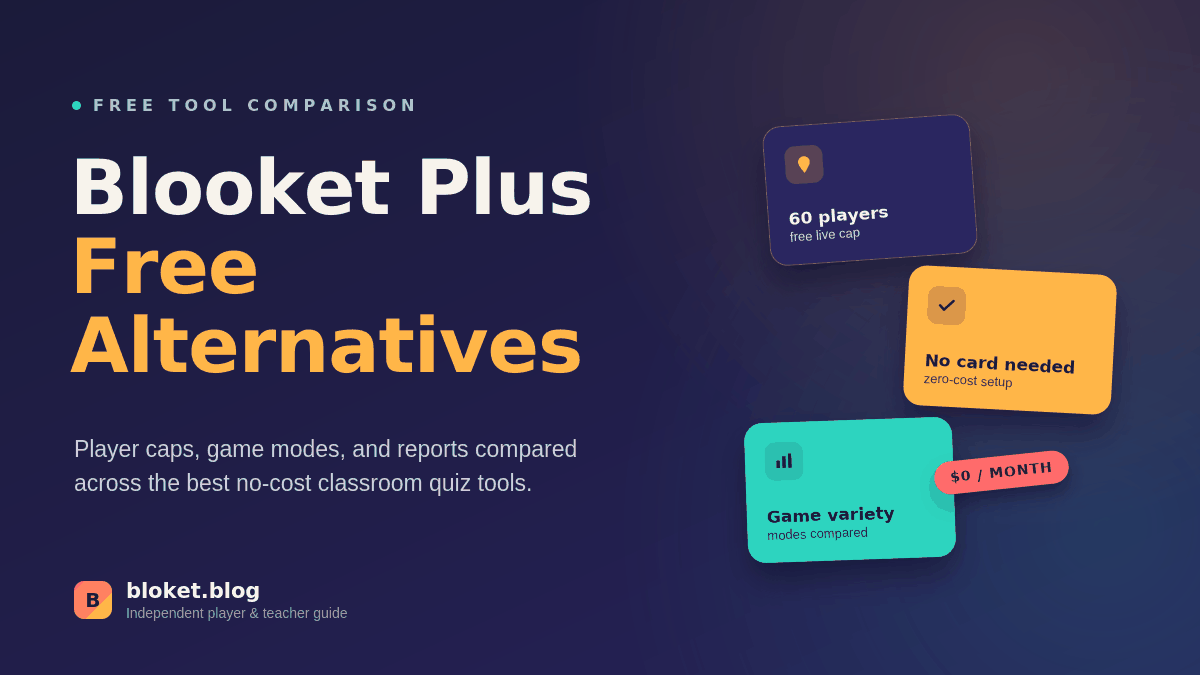
Paying for Blooket Plus is not the only route to bigger games, more game modes, and better reports. The closest free alternatives are Blooket’s own Starter plan pushed to its limit, Kahoot’s free Basic plan, Wayground (formerly Quizizz), Quizlet Live, and Gimkit’s restricted free tier, each trading away one or two Plus-only perks while still covering live games and basic reporting at no cost.
This guide is for teachers comparing tools before they spend a cent and for students who just want more game modes without asking a parent for a card number. It breaks down what Plus really adds, how to judge a free tool against it, and which platforms hold up once the novelty wears off.
What does Blooket Plus actually add over the free Starter plan?
Blooket Plus raises the live game player cap from 60 to 300, adds Plus-only game modes, folders, question-by-question reports, audio questions, and longer homework deadlines. Everything else, including hosting games, joining games, and building question sets, already works on the free Starter plan.
What the free Starter plan already covers
Every Blooket account starts as Starter, and it stays free for as long as the account exists. Starter users can build and publish question sets, search the public set library, host most game modes, and let up to 60 players join a single live game.
Students collect Blooks from packs using tokens earned through gameplay, and that whole collection loop works the same on Starter as it does on Plus. In my own testing across several live sessions, the 60-player cap only became a problem in larger lecture halls or combined-class events, not in a standard classroom of 20 to 35 students.
What only Plus adds
Plus raises the player ceiling to 300, opens a set of Plus-exclusive game modes, and adds folders to organize sets and favorites instead of scrolling one long list. It also adds question-by-question reports with individual student breakdowns, a question bank for pulling questions from any set into your own, audio questions, set merging, and a small token bonus for everyone in the game.
Homework assignments get a longer runway too: Starter caps deadlines at 14 days, while Plus stretches that to a full year. None of these additions change how the core game works, which is exactly why so many people search for free alternatives to Blooket Plus instead of paying for it.
How the token economy compares between Starter and Plus
Tokens, often called coins by players, work the same earning system on both plans: a daily cap around 500 tokens from normal gameplay, plus a separate daily wheel spin that can add a large one-time bonus. Plus adds a flat bonus of extra tokens per game for both the host and every player who joins, which speeds up Blook collection but does not raise the daily ceiling itself.
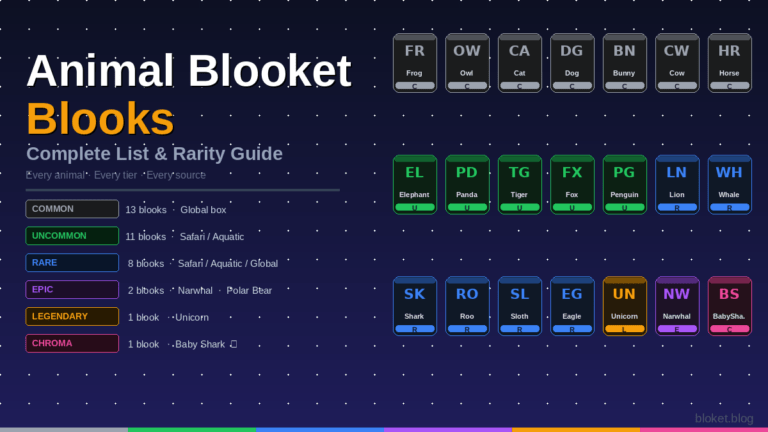
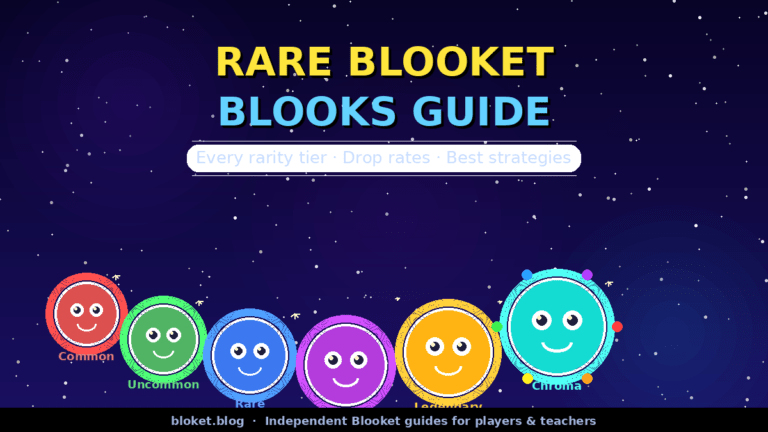
Blook rarity tiers, common, rare, epic, legendary, and chroma, stay identical across both plans, so a Starter account can open every pack and chase the same rare drops a Plus account can. The only token-related gap is the small per-game bonus, which matters more for students grinding toward a specific Blook than for teachers picking a platform for classroom use.
How do you choose the right free alternative to Blooket Plus?
Pick a free alternative by matching it against the three things Plus actually solves: player count, report depth, and game variety. Test the tool with your real class size and a real question set before committing, because marketing pages rarely mention the player cap or report limits clearly.
Step 1: Match the game style to what keeps your group engaged
Blooket’s appeal comes from its mini-game variety, where the same question set can power a racing game one day and a tower-defense game the next. Kahoot and Wayground lean more toward a straightforward question-and-leaderboard loop, while Gimkit adds a virtual economy where students buy upgrades with in-game cash.
If your group responds to variety more than competition, prioritize tools with several free game formats over ones with a single polished mode. A class that plays the same quiz format every week tends to disengage faster than one that switches between a racing game, a team battle, and a self-paced review session across a unit.
Step 2: Check the real player cap against your class or group size
Free tiers vary wildly here, and this is the single biggest reason people search for Blooket Plus free alternatives in the first place. Blooket Starter allows 60 players per live game, which covers almost any normal classroom without paying for Plus.
Some competing free tiers cap out far lower, so count your largest class or event before testing anything. A tool that looks fun in a demo can become unusable the moment 32 students try to join at once.
Combined classes, assemblies, and remote sessions push this limit even harder, since two or three sections joining the same code can quietly exceed a low free cap without anyone noticing until the join screen starts rejecting players.
Step 3: Test how deep the free reporting goes
Plus adds question-by-question data and individual student breakdowns that the free Starter plan does not show. If grading or progress tracking matters to you, run one full game on each candidate platform and check what the post-game report actually displays before assuming it matches what you need.
A leaderboard is not a report. Several free tools show only final rankings unless you upgrade, which defeats the purpose if formative assessment data is the reason you are switching tools.
Decide ahead of time whether you need per-question accuracy, individual student history across multiple games, or just a quick snapshot of who struggled today. The first two usually sit behind a paid tier somewhere, even on platforms that look generous everywhere else.
Step 4: See how easily your existing question sets transfer
Question sets do not move automatically between platforms. Most tools let you type or paste questions in bulk through a spreadsheet-style import, but the exact format differs, so budget time to reformat existing sets rather than expecting a one-click transfer.
A 30-question set with images or audio attached usually takes longer to rebuild than a plain text set. Start the transfer with your most-used set first, since that single test reveals most of the formatting quirks you will hit with the rest of your library.
Step 5: Run a short trial before fully switching
Pick one upcoming review session and run it on your top two candidate platforms instead of committing for a full term right away. In my classroom trials, the platform that looked best on paper sometimes lost out once actual students hit the join screen at the same time and the connection lagged on shared school internet.
Keep Blooket as a backup option during the trial period rather than deleting sets or breaking old habits immediately. A two-week side-by-side test costs nothing and tells you far more than any comparison article, including this one.
Which free alternatives to Blooket Plus are worth trying?
The strongest free alternatives to Blooket Plus are Blooket Starter itself, Kahoot’s Basic plan, Wayground (formerly Quizizz), Quizlet Live, Gimkit’s limited free tier, and Baamboozle, each suited to a different priority: player count, self-paced homework, flashcard-based review, or simplicity for younger students.
Comparison table: free tiers side by side
| Platform | Free player cap | Free game modes | Free reporting | Best for |
|---|---|---|---|---|
| Blooket Starter | Up to 60 | Most modes, minus Plus-exclusive ones | Final leaderboard, basic history | Standard classrooms wanting Blooket’s mini-games at no cost |
| Kahoot Basic | Live games with a generous default cap | Classic, team, and a few practice modes | Leaderboard and basic summary | Quick live quizzes with minimal setup |
| Wayground (formerly Quizizz) | Live and self-paced games | Live quiz mode plus homework-style assignments | Per-question accuracy on free tier | Self-paced review and asynchronous homework |
| Gimkit | A small, fixed cap on the free tier | One core mode on free, more behind paid plans | Basic results only | Testing the economy mechanic before paying |
| Quizlet Live | Live team-based flashcard races | One main live game format | Final standings only | Vocabulary and definition-heavy review |
| Baamboozle | Live games, typically without a hard player cap | Simple point-and-steal team format | Final score only | Younger students and low-stress review |
Blooket Starter pushed to its limit
Blooket’s own free plan is the most direct of the free alternatives to Blooket Plus because it keeps the exact mini-games students already know. The 60-player cap, 14-day homework limit, and absence of audio questions are the only real walls, and most single classrooms never hit any of them.
If you do outgrow Starter later, Plus exists as a paid upgrade rather than a separate platform, so nothing about your sets or student familiarity gets lost in the move.
Kahoot Basic
Kahoot’s free Basic plan covers live hosted games with a familiar buzzer-style format and a large public library of ready-made quizzes. It trades away Blooket’s mini-game variety for simplicity, which works well for quick warm-ups but feels repetitive if you run it every day.
Kahoot’s paid tiers add custom branding, deeper reports, and additional question types, similar to how Plus extends Blooket, so the same upgrade-later logic applies if Basic stops covering your needs.
Wayground (formerly Quizizz)
Quizizz rebranded to Wayground, though the core product that teachers know stayed the same through the name change. Its free tier stands out for self-paced, homework-style assignments where students answer at their own speed instead of racing a live clock, which makes it a strong pick for asynchronous review rather than in-class energy.
Wayground also supports live games on the free tier, so it does not force an either-or choice between live play and homework mode. Deeper AI-assisted question generation and some accessibility features sit behind paid plans.
Gimkit’s free tier
Gimkit’s economy mechanic, where correct answers earn in-game cash to spend on upgrades, genuinely appeals to older students who find simple leaderboards boring. The free tier caps participation at a small number of players, historically in the single digits, which makes it more useful for a quick personal test run than for a full class.
Teachers who want Gimkit for daily classroom use generally end up on a paid plan, since the free cap rarely covers even a small group, let alone a full section.
Quizlet Live
Quizlet Live pairs well with classes that already use Quizlet flashcards for vocabulary or definitions, since the live game pulls directly from existing study sets. It offers far less game variety than Blooket, but the free tier covers full classes without a player cap problem.
Quizlet’s paid plan focuses more on ad removal and offline study features than on opening up the live game itself, so the free tier is usually enough for classroom play.
Baamboozle
Baamboozle strips the format down to a simple, low-pressure team game where students pick a numbered tile, answer a question, and steal or defend points. There is no flashy animation and no character collection, which makes it a comfortable fit for younger students or anyone who finds Blooket’s pace overwhelming.
The free version covers the core game fully, with a small library of ready-made games included, and it asks for no student accounts or logins at all, which speeds up setup for short reviews between lessons.
What mistakes do teachers and students make when switching away from Blooket Plus?
The most common mistakes are assuming every free tier behaves the same way, skipping a player-cap check before game day, and switching an entire class mid-unit without testing the new tool first. Each of these turns a cost-saving switch into a classroom disruption.
Assuming “free” means feature-for-feature identical
A free tier is rarely a smaller version of the same product. Wayground’s free plan, for example, leans toward self-paced assignments rather than the live, fast-paced energy Blooket is known for, so swapping tools changes the classroom experience, not just the price.
Ignoring how question sets move between platforms
Question banks do not carry over automatically. Teachers who switch tools the night before a lesson often end up rebuilding a 25-question set from scratch because the import format on the new platform expects a different column order.
Picking a tool based on hype instead of player caps
A platform that trends well on social media is not automatically the right fit for a 34-student classroom. Check the actual free player limit first, since several popular tools cap free games well below a typical class size.
Switching mid-unit without a trial run
Dropping a brand-new platform on students in the middle of a unit adds a learning curve at the worst possible time. Running one low-stakes practice game first lets students get comfortable with the join process before it counts toward anything graded.
Overlooking login and device requirements
Some platforms let students join with just a game code and a nickname, while others expect a student account or school email to track progress. A tool that requires logins works fine for a 1:1 device classroom but slows down a shared-laptop-cart setup considerably, so check this before picking a tool for a room with limited devices.
FAQs
Is there a way to get Blooket Plus features for free? Not officially. Blooket Plus is a paid subscription, and there is no legitimate way to get its exclusive game modes, folders, or extended reports without paying. Sites or browser scripts that claim to grant free Plus access typically carry malware or account-theft risks and should be avoided.
What is the closest free alternative to Blooket Plus? Blooket’s own Starter plan is the closest match because it keeps the same mini-games and interface, only capping the player count lower and limiting homework deadlines. Among outside tools, Kahoot Basic comes closest for live, buzzer-style energy without a subscription.
How many players can join a free Blooket game? Free Starter accounts can host live games with up to 60 players at once. Blooket Plus raises that ceiling to 300, which mainly matters for combined classes, school-wide events, or large remote sessions rather than a single standard classroom.
Does Wayground (formerly Quizizz) have a generous free plan? Yes, Wayground’s free tier supports both live games and self-paced homework assignments, which makes it one of the more flexible free options for asynchronous review. Some AI-assisted features and deeper analytics remain behind paid plans.
Is Gimkit free for classroom use? Gimkit’s free tier exists but caps participation at a small number of players, historically around five, which is far below a normal class size. Most teachers who want to use Gimkit for regular class games need a paid plan.
Can I import my Blooket question sets into another platform? Most platforms support bulk question import through a spreadsheet or CSV-style upload, but the column format differs by platform. Expect to spend time reformatting an existing set rather than copying it over in one step.
Do free alternatives to Blooket Plus show individual student reports? Coverage varies by platform. Some free tiers show only a final leaderboard, while others, including Wayground’s free plan, show per-question accuracy; full individual breakdowns tied to specific questions are usually a paid-tier feature across most of these tools, Blooket included.
Which free alternative has the most game mode variety? Blooket Starter still leads on free game variety, since it keeps the same mini-game library that made the platform popular, minus the handful of modes reserved for Plus. Gimkit’s free tier offers the most distinct mechanic, the cash-and-upgrades economy, but only for a very small group of players at once.
Getting more from Blooket without paying for Plus
Free alternatives to Blooket Plus exist for nearly every priority, whether that means a higher player cap, deeper reports, or a different game style entirely. Start by listing your actual class size and the one Plus feature you would miss most, then test your top two candidates with a single live session before changing anything permanently.
Blooket Starter, Kahoot Basic, Wayground, Quizlet Live, Gimkit’s free tier, and Baamboozle each solve a different piece of the puzzle, and none of them require a subscription to try. Match the tool to the problem you actually have instead of the one that trends loudest, and the right free fit usually becomes obvious within a single class period.
Run that trial game this week, compare the join experience and the post-game report side by side, and pick whichever tool survived contact with a real group of students.
Ready to elevate your daily life with smarter choices? Unlock the full potential of our knowledge-packed articles today.