Blooket Economy Explained: How Coins and Blooks Work
Blooket has a full in-game economy built around earning coins, spending them in the Market, and collecting blooks. New players often treat it as background noise, grinding coins without understanding what drives payouts or how the Market actually works. This guide explains every layer of the system: how coins are generated, what blook rarity actually means, how the Market drop tables function, and what both students and teachers should understand before spending a single coin.
What is the Blooket economy?
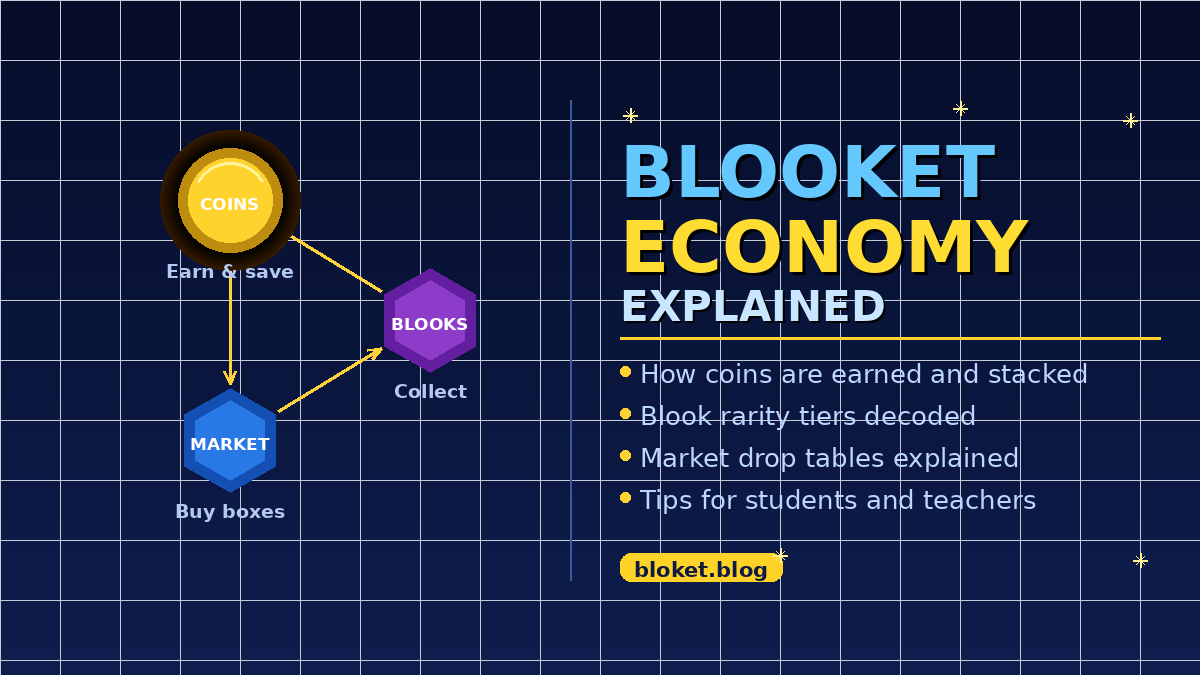
The Blooket economy is the system that governs how players earn coins through gameplay, spend those coins in the Market, and collect blooks of varying rarity. It is a closed loop: coins come from playing games and daily bonuses, blooks come from opening boxes purchased with coins, and blooks are entirely cosmetic with no effect on gameplay outcomes.
The three core components
Every part of the Blooket economy connects back to three elements: coins, blooks, and the Market.
Coins: the in-game currency earned through gameplay, the daily spin, and account milestones — our guides on how to get tokens in Blooket and the Blooket token vs coin difference clear up the terminology around tokens and coins. Coins have no real-world monetary value and cannot be transferred between accounts.
Blooks: the characters players use in games. They are purely cosmetic. A Chroma-tier blook performs identically to a Common-tier blook in every game mode. Collecting blooks is a progression system that sits entirely outside gameplay performance.
The Market: the shop where players spend coins to open blook boxes. Each box has a fixed price and a specific drop table. Players purchase rolls on that table rather than specific blooks.
How the loop works
A player joins a game, answers questions accurately, and earns coins at the end. They accumulate coins over multiple sessions, visit the Market, purchase a box, and receive a randomly drawn blook from that box’s drop pool. If they get a duplicate, it adds to their collection count but provides no additional reward. They return to gameplay to earn more coins and repeat the cycle.
This loop is deliberately simple. The complexity lives inside the Market’s probability structure and the rarity tier system, which most guides don’t fully explain.
How coins are earned in Blooket
Coins are generated through three main channels: active gameplay, the daily spin, and bonus milestones. Understanding how each channel works helps players maximize their total without changing how much time they spend playing.
Gameplay coin payouts
Every completed game session awards coins based on two factors: how the player performed and how long the session ran. Performance bonuses reward accurate, fast answering. Session length determines the total coin pool distributed. A standard game pays roughly 5 to 30 coins per player depending on mode and individual performance — our guide on how much coins per Blooket game covers the full payout ranges by mode. Longer games and multi-round modes push that range higher.
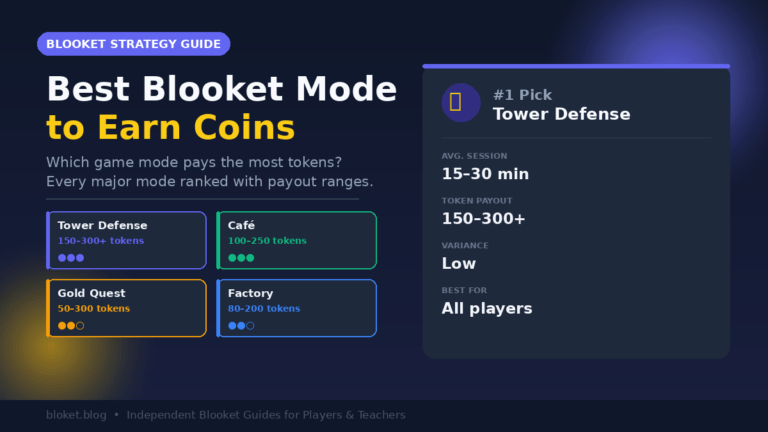
The game mode matters significantly here — our guide on the best Blooket mode to earn coins ranks every mode by payout, and our how to get coins fast in Blooket guide covers the grinding methodology. Not all modes have the same ceiling, and the variation between the lowest-paying and highest-paying modes is large enough to change a player’s monthly coin total noticeably.
The daily spin
Every player receives one free spin every 24 hours — our Blooket daily rewards guide covers every bonus the system offers. The spin costs nothing and takes a few seconds to claim. Payouts range from a small number of coins to occasional larger rewards. The spin alone won’t build a stash quickly, but missing it consistently costs more than players realize. Claiming it daily for a month produces a coin total comparable to several full game sessions.
Coin payout comparison by game mode
| Game mode | Typical coins per session | Variance | Notes |
| Gold Quest | 30–50 | High | Scales with stolen gold; strong players earn most |
| Tower Defense | 20–40 | Low–Medium | Longer sessions, steady floor |
| Battle Royale | 15–30 | Medium | Competitive format, mid-range rewards |
| Racing | 10–25 | Low | Short sessions, consistent but lower ceiling |
| Factory | 10–20 | Low | High engagement, lower coin output |
| Fishing Frenzy | 8–18 | Low | Casual mode, below-average payouts |
| Café | 10–22 | Low | Newer mode, steady but not a top earner |
These ranges reflect standard session lengths with average-to-good performance. A perfect Gold Quest run from a top player can exceed 50 coins; a poor run in a short session can drop below 10. The table gives you the honest middle ground.
Account milestones and bonuses
Blooket occasionally rewards players for account progression milestones, such as hosting a certain number of games or reaching play count thresholds. These bonuses contribute to the coin total without requiring any additional effort beyond normal use. Teachers who host regularly accumulate these milestones faster than casual players.
How the blook system works
Blooks are the characters players select before entering a game. The collection system gives players a progression goal that runs parallel to academic gameplay, which is part of why Blooket maintains engagement over time.
Blook rarity tiers
Blooket uses a rarity hierarchy to classify blooks from most common to most rare. The tiers, ordered from lowest to highest rarity, are:
- Common — appear frequently in basic boxes, low drop value
- Uncommon — available in most box types, slightly lower frequency
- Rare — appear in mid-tier and higher boxes at reduced rates
- Epic — available in premium boxes, meaningful drop rate reduction
- Legendary — very low drop rates, found only in higher-tier boxes
- Chroma — the highest standard rarity tier, extremely low drop rates
- Mystical / Special — category for blooks tied to specific events or premium access
Rarity does not mean better performance. A Common blook and a Chroma blook are mechanically identical during gameplay. Rarity communicates drop probability and collection prestige only.
How rarity affects box selection
Each box in the Market has a specific drop table that lists which blooks it can produce and at what probability — our guide on which Blooket box gives the best blooks compares every major box side by side. A cheaper box contains mostly Common and Uncommon blooks with a small chance of Rare. A premium box shifts the table toward Epic, Legendary, and Chroma blooks, but the base price reflects that shift.
This is the most misunderstood part of the economy. Players assume that opening more expensive boxes always produces better results. What it actually does is change the probability distribution you’re rolling on. A player saving for a specific Legendary blook must find which box that blook belongs to and roll that specific table. Opening unrelated boxes, regardless of price, will not produce it.
Duplicate blooks
When a player opens a box and receives a blook they already own, the result is a duplicate — our trade Blooket tokens for coins guide covers how duplicates convert into tokens you can use. Duplicates add to the total collection count and show in the collection tab but provide no coin refund or secondary reward in standard gameplay. This is one of the less satisfying parts of the economy for players deep into a collection, and it’s worth factoring into spending decisions. The more blooks you own from a given box’s drop table, the higher the probability of a duplicate on each pull.
How the Market works
The Market is where coins become blooks. Understanding its structure prevents the two most common mistakes players make: opening boxes impulsively and opening the wrong boxes for their collection goal.
Box types and pricing tiers
Blooket’s Market offers boxes at different price points, ranging from under 25 coins for basic options to several hundred for premium boxes — our Blooket market buying guide walks through the full Market interface. Lower-priced boxes provide more total rolls for the same coin investment but draw from a table weighted toward Common and Uncommon blooks. Higher-priced boxes shift the table but deliver fewer total rolls per coin spent.
There is no universally correct price tier to target. The right answer depends on what you’re trying to collect. If you want any new blook and don’t have a specific target, cheaper boxes give you the highest volume of outcomes. If you want a particular high-rarity blook, the box it belongs to is the correct choice regardless of price.
Opening in batches vs. single pulls
Single box opens are the most common and least efficient approach to collecting. The random drop rate means a single pull is overwhelmingly likely to produce a Common or Uncommon blook. Opening the same box three to five times in one sitting doesn’t change the odds per pull, but it exposes you to more outcomes from the same table.
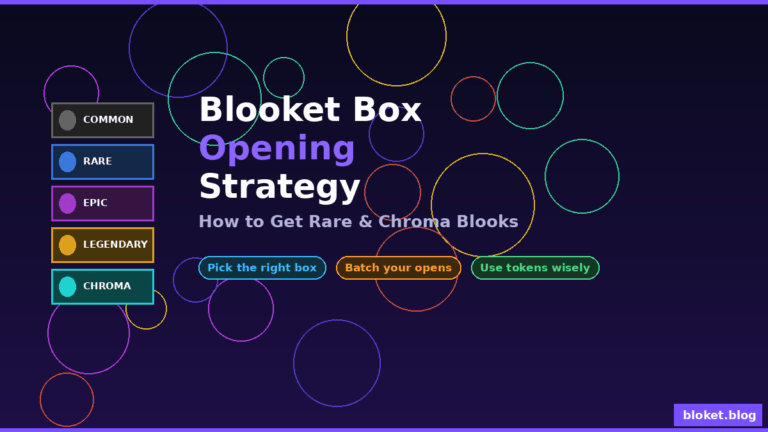
In practice, saving until you can open a box several times in one session consistently produces better collection results than single-pull sessions repeated across many days — our Blooket box opening strategy and best time to open Blooket boxes guides walk through this approach in detail. The psychological benefit of a batch session also matters: one satisfying sitting beats a string of underwhelming single opens.
Blooket Plus and the premium economy layer
Blooket Plus is a paid subscription that adds a layer on top of the standard coin economy. Subscribers receive coin bonuses on gameplay earnings, which effectively increases the return from every session without requiring additional play time. For daily active players, this compounds meaningfully over weeks. For players who use Blooket once or twice a week, the coin benefit is less likely to justify the subscription on its own.
Blooket Plus also grants access to exclusive blooks that are not available through the standard Market. These blooks fall outside the coin economy entirely – they require an active subscription to obtain and keep.
Common misconceptions about the Blooket economy
Several persistent misunderstandings cause players to make worse decisions with their coins. Each one is specific enough to address directly.
“More expensive boxes always produce rarer blooks”
Price reflects the composition of the drop table, not a guarantee of rarity on any given pull. A 500-coin box has a higher proportion of Legendary and Chroma blooks on its table than a 25-coin box, but you can still pull a Common from it. The probability improves; the outcome isn’t guaranteed. Players who expect a premium box to produce a rare blook on every open will consistently feel disappointed. The table shift is real – the guarantee is not.
“Rare blooks make you better at games”
Blooks are cosmetic. A player with a Chroma blook and a player with a Common blook have identical performance ceilings in every game mode. Speed, accuracy, and question set familiarity determine outcomes. This matters for teachers especially – students sometimes believe collecting rare blooks provides a gameplay edge, which is worth correcting explicitly.
“You can eventually buy specific blooks”
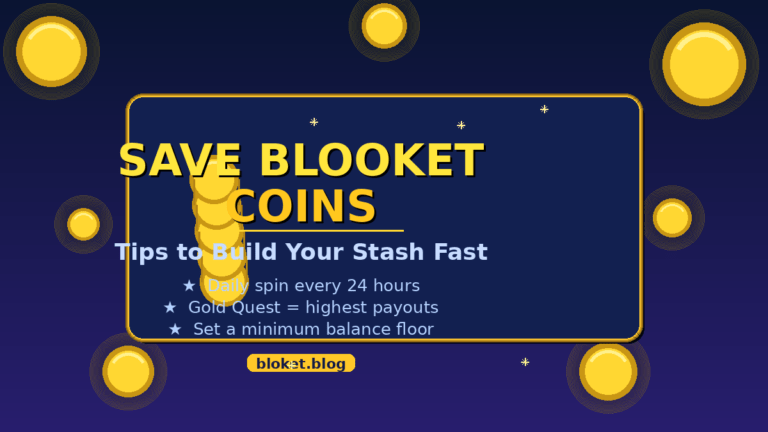
There is no mechanism in the standard Market to purchase a specific blook directly — our smart Blooket coin spending guide and save Blooket coins tips guides cover how to plan your spending around this constraint. Every Market transaction is a box purchase, and every box produces a random outcome from its drop table. The only way to reliably obtain a specific blook is to identify its box, roll that box repeatedly, and accept that the exact pull timing is beyond your control. Players who spend coins waiting for a direct purchase option that doesn’t exist waste resources that could have gone toward rolling the correct table.
“Coins accumulate faster with Blooket Plus for all players”
Blooket Plus increases the coin bonus on gameplay earnings, but that bonus only multiplies the coins you were already earning. A player who rarely plays sees a small absolute increase. The subscription genuinely benefits players who are already logging several sessions per week – for them, the bonus compounds into a substantial monthly total. For occasional players, the math usually doesn’t favor it on coins alone.
What teachers should understand about the economy
The Blooket economy affects student motivation, engagement patterns, and classroom dynamics. Teachers who understand it can work with it rather than against it.
Why students care about coins and blooks
Blooks represent visible collection progress. Students who have a rare blook display it as a social signal in multiplayer games, where everyone can see which blook each player chose. This social layer drives the motivation to earn coins and collect more. For many students, the desire to earn a specific blook is a more immediate motivator than the academic content itself – which is exactly what Blooket’s design intends.
Using the economy to motivate engagement
Teachers who build longer question sets, rotate game modes, and host games regularly indirectly support student coin earnings. Longer sessions pay out more. Higher-engagement games produce better individual performance, which increases payouts. A classroom where students are genuinely competing and answering accurately earns more coins per session than one where students are disengaged and guessing.
Mentioning the daily spin to students also pays off. Many students don’t know it exists or forget to claim it. A brief mention at the start of a Blooket session – pointing out the spin is available – builds a habit that keeps students returning to the platform between formal class sessions.
Addressing the “pay-to-win” question
Students sometimes ask whether Blooket Plus gives paying students an unfair advantage. The honest answer is no. Plus provides coin bonuses and cosmetic blooks. It does not affect question accuracy requirements, game mode mechanics, or any factor that determines game outcomes. Teachers can address this directly: the economy is structured so that all students compete on equal mechanical footing regardless of subscription status.
FAQs
What is the Blooket economy in simple terms?
The Blooket economy is the system where players earn coins by playing games and claiming a daily spin, then spend those coins in the Market to open blook boxes. Blooks are cosmetic characters with no effect on gameplay. The goal is to collect blooks across different rarity tiers.
Do rare blooks help you win games?
No. Blook rarity is entirely cosmetic. Every blook, regardless of tier, performs identically in every game mode. Winning is determined by how accurately and quickly you answer questions, not by which blook you select.
How many coins do you earn per game?
Most standard sessions pay between 5 and 50 coins depending on the game mode and individual performance. Gold Quest and Tower Defense consistently sit at the higher end of that range. Longer games distribute more coins across all players.
Can you get a specific blook by saving enough coins?
No. The Market sells boxes, not specific blooks. Each box rolls a random result from its drop table. To maximize your chances of a specific blook, identify which box it drops from and roll that box repeatedly – but the exact timing of when it appears is random.
What is the difference between blook rarity tiers?
Rarity tiers (Common, Uncommon, Rare, Epic, Legendary, Chroma, and Mystical/Special) reflect how infrequently a blook appears in drop table results. Lower rarity blooks appear more often; higher rarity blooks have lower drop rates. All tiers are cosmetically equal during actual gameplay.
Does Blooket Plus change how the economy works?
Blooket Plus adds a coin bonus to gameplay earnings, which increases how many coins you earn per session without changing how sessions work. It also grants access to exclusive blooks unavailable in the standard Market. Plus does not affect game mechanics or give subscribers any competitive edge.
What happens when you get a duplicate blook?
Duplicate blooks add to your collection count in the collection tab but provide no coin refund or additional reward in standard gameplay. The more blooks you own from a given drop table, the higher your probability of pulling a duplicate on each subsequent open from that box.
Is the Blooket economy the same for students and teachers?
The coin and blook system is available to all account types. Teachers who host games earn tokens alongside standard coins, which contribute to account progression. Playing as a student – even in your own games on a teacher account – earns standard coins the same way any player account does.
Conclusion
The Blooket economy runs on a simple loop: play games to earn coins, spend coins in the Market on boxes, receive blooks from those boxes. The complexity worth understanding is inside that loop – specifically how coin payouts vary by mode and performance, how drop tables work, and how rarity tiers connect to specific boxes rather than general box quality.
Start by matching your coin-earning approach to the right game mode: Gold Quest for maximum output when you know the question set, Tower Defense for steady accumulation across sessions. Then apply that spending understanding: research the correct box before opening anything, and save until you can make several pulls in one sitting.
The economy rewards patience and intention. Players who understand how it works collect blooks faster, waste fewer coins, and stay more motivated across a full semester of play.
Get ready to discover something new—our recommended posts come packed with deep insights.