Blooket Racing Mode Guide: Strategies to Win Every Race
Racing mode is one of Blooket’s most competitive live formats, putting every player on a shared track where correct answers push your blook forward and incorrect ones hand ground to your opponents — unlike resource-builder modes such as our Factory mode guide covers.
Whether you are a student chasing first place or a teacher using it as a classroom review tool, understanding exactly how the mode works changes outcomes fast. This guide — written as an independent resource for players and educators — covers every mechanic, the strategies that consistently win, and the setup decisions that make each race worth running.
What is Blooket Racing mode?
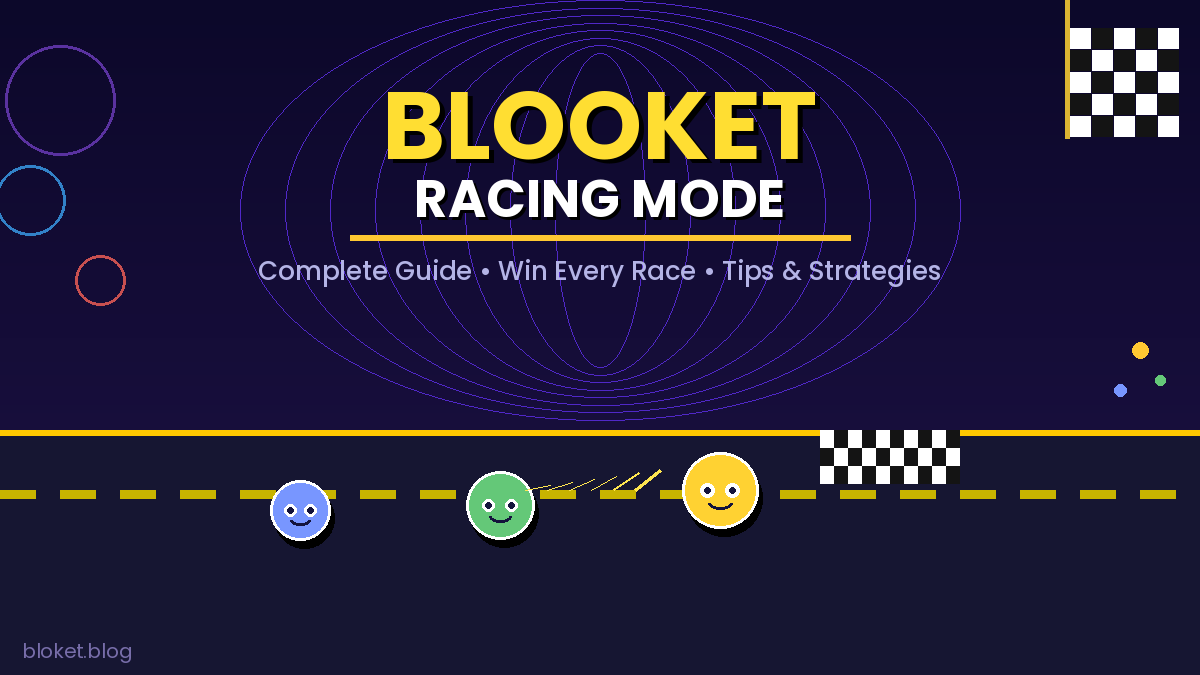
Blooket Racing mode is a multiplayer game where each player controls a blook on a race track. Every correct answer moves your blook one segment forward. The first player to cross the finish line wins. Because all players race at the same time, competition is visible and immediate from the very first question.
Racing mode stands apart from other Blooket formats because accuracy drives results directly. There are no hidden coin stacks or luck-based draws influencing the outcome. Your blook’s position on the track reflects your performance, which is why the mode produces high engagement and genuine competitive energy across both classrooms and casual sessions.
How the race track is structured
The track is divided into segments. Each correct answer advances your blook one segment toward the finish line. The total number of segments depends on question count and host settings, so knowing the approximate track length helps you gauge how much ground you have left to cover.
All players’ blooks appear on the same shared track view, meaning every student can see their position relative to others in real time. This shared visibility is one of Racing mode’s strongest design features — students are never guessing how they are doing; they can see it.
Power-ups in Racing mode
Hosts can enable or disable power-ups before a game starts. When active, power-ups appear during gameplay and give players the ability to boost their own blook’s speed, slow an opponent, or trigger other effects. They add a strategic layer on top of the core accuracy-based race. When disabled, the game becomes a pure contest of who answers correctly the fastest.
Coin rewards
Blooket distributes coins based on finishing position and overall accuracy. Players who finish first and maintain a high correct-answer rate earn the most. Players who do not win still earn coins for correct answers, which keeps the reward system meaningful for all participants regardless of final ranking.
How to play Blooket Racing mode: step by step
Getting into a Racing mode game takes under two minutes. Here is the complete flow from setup to finish line.
Step 1: The host sets up the game
The teacher or session host logs into their Blooket account, selects a question set, and chooses Racing as the game mode. Before launching, hosts can adjust question count, time per question, and whether power-ups are on. For classroom use, a set of 15 to 20 questions is a reliable starting point.
Step 2: Players join the lobby
Students open blooket.com/play and enter the code the host shares. After joining, each player can see other participants’ names and blooks in the lobby. The host controls the start time, so latecomers can join up until launch. There is no required minimum player count, but the competitive dynamic is strongest with five or more players.
Step 3: Questions cycle and players answer
Once the host starts the game, questions appear individually on each player’s screen. All questions are multiple-choice, drawn from the selected set. A correct answer moves the blook one segment forward. An incorrect answer provides no movement and may trigger a short cooldown before the next question loads, depending on settings.
Speed matters here because questions keep cycling. The faster a player answers correctly, the more ground they cover before opponents do the same.
Step 4: Power-ups activate (if enabled)
When power-ups are on, players earn or encounter them at certain points during the race. An offensive power-up used on the current leader near the finish line has far more impact than the same power-up used early when positions are still shifting. Players who treat power-ups as strategic resources rather than instant-use pickups consistently outperform those who spend them immediately.
Step 5: First to the finish line wins
The first blook to cross the finish line ends the race. A results screen immediately shows all finishing positions and coin distributions. Hosts can review individual answer data after the race — a useful tool for teachers identifying specific gaps before running another round.
Winning strategies for Blooket Racing mode
Speed alone does not win Racing mode consistently. Players who finish at the top in repeated sessions combine fast responses with reliable accuracy and smart power-up timing.
Accuracy beats raw speed
An incorrect answer costs more than it looks. Beyond getting zero forward movement, many settings add a cooldown before the next question loads. In testing across multiple Racing mode sessions, players who maintained above 85% answer accuracy consistently outplaced faster responders with lower accuracy rates. Taking one extra second to read a question fully almost always produces a better trade-off than clicking fast and being wrong.
This effect is strongest in the first half of a race. Rushing early and accumulating incorrect answers creates a deficit that is very hard to recover later.
Know the content before the game
Students who have already studied the question set answer familiar questions in under two seconds. That speed compounds across 20 or 25 questions and builds a lead that is difficult to close. If you have access to the question set in advance — as is common with teacher-assigned review sets — spending ten minutes on the material before a session changes your finishing position noticeably.
Time power-ups for maximum impact
When power-ups are active, holding an offensive one until the leader is close to the finish line can shift the result entirely. Early in the race, power-up effects are largely absorbed because the field continues racing. Patience with power-ups is one of the clearest skill gaps between casual and experienced Racing mode players.
Develop a consistent reading rhythm
Experienced players build a steady pace: read the question, consider the options, select, advance. They do not linger on questions they know, and they do not panic on ones they do not. A calm rhythm reduces errors from rushing and keeps momentum consistent throughout the race. When genuinely unsure of an answer, a quick educated guess is almost always better than stalling.
Adapt your pace to the question type
Some question sets use longer prompts that reward careful reading. Others rely on fast recall of simple facts. Recognizing which type you are in by the third question lets you calibrate. Applying the same pace to every question type regardless of complexity is a habit that quietly costs positions over a full race.
How teachers can run Racing mode effectively
Racing mode is one of the easiest Blooket formats to deploy because students understand the objective immediately, which is why it features in our best modes for small classes roundup. The challenge is making it genuinely useful beyond being entertaining.
Choose the right question set
The mode handles engagement. The teacher’s job is to put the right content inside it. For test review, use a question set that matches exactly what students need to know. For vocabulary introduction, a shorter set with clear definitions performs better than a large mixed one. A well-matched question set is the single most important factor in whether a Racing mode session achieves a learning goal.
Use short races for quick formative checks
A full 20-question race takes eight to twelve minutes depending on the group. For a rapid check during a lesson, drop the question count to eight or ten and run two back-to-back races. The short format keeps energy high, and running two rounds gives more data points on which students are struggling with specific content.
Review results between races
The post-race leaderboard and per-student answer data are teaching tools, not just scores. After each race, spend two minutes identifying and reviewing the two or three questions most players got wrong. This feedback loop reinforces material while students are still engaged. It also makes the next race more accurate — students correct their understanding before running again rather than after.
Address the inclusion gap
Students who finish last repeatedly in competitive modes tend to disengage over time. A few adjustments help. Enabling power-ups gives slower responders a way to influence the race beyond raw answer speed. Varying the question order between races removes the advantage of pattern recognition over genuine knowledge. For classes with wide ability gaps, grouping students by level for specific rounds removes the dynamic of the same players always winning.
Layer team structures on top of the mode
Blooket’s native Racing format is individual, but teachers can build a team layer manually. Assign students to groups and track each group’s combined coin total across a session. This shifts the focus from individual finishing positions to collective improvement, which reduces pressure on lower-scoring students and encourages peer support rather than isolated competition.
Common Racing mode mistakes to avoid
Both students and teachers make the same predictable errors in Racing mode. These are the ones that appear most often and cost the most.
Clicking before reading
The most frequent mistake across all player levels is selecting an answer before reading every option. Blooket’s multiple-choice questions often include plausible-sounding wrong answers next to the correct one. Scanning all four options adds roughly one second per question and prevents the careless errors that consistently pull players out of top positions.
Underestimating incorrect-answer delays
Players who have not tracked their own timing often do not realize how much the cooldown after wrong answers accumulates. In a 20-question race, three incorrect answers with a short cooldown each can add up to 10 or more seconds of total lost time. In a close race, that margin is often the difference between first and third. Understanding this consequence makes the cost of rushing feel concrete rather than abstract.
Using power-ups immediately after earning them
New players spend power-ups the moment they get them. Strategic players hold them. An offensive power-up used on the race leader with five segments remaining has a real chance of changing the result. The same power-up used in the opening quarter of the race is largely wasted because the field has not yet spread out. Treating power-ups as a managed resource rather than an instant reward is a learnable habit with consistent returns.
Not adjusting question count for class size
A 10-question race with 30 students ends before slower answerers have seen half the material. The first finishers win while others are still mid-race, limiting data quality and the review value of the activity. Increasing question count for larger groups keeps everyone racing through the same content and gives the host more complete performance data.
Repeating the same question set too many times
Question sets that students have seen repeatedly lose their diagnostic value. Students begin recognizing questions by their position in the sequence rather than by their content. Rotating between two or three similar sets, or randomizing order between sessions, keeps results tied to actual knowledge rather than familiarity.
Racing mode vs. other Blooket modes
| Feature | Racing mode | Gold Quest | Tower Defense | Factory mode |
|---|---|---|---|---|
| Competition style | Head-to-head race | Coin-based luck | Team defense | Resource building |
| Best use case | Review and speed drills | Variety and engagement | Collaborative play | Sustained sessions |
| Skill emphasis | Accuracy + speed | Speed + chance | Strategy | Consistent accuracy |
| Setup complexity | Low | Low | Medium | Medium |
| Power-ups | Yes (optional) | Yes | Yes | Limited |
| Visible competition | Real-time track | Hidden until reveal | Shared defense board | Individual factory |
Racing mode is the strongest choice when the goal is transparent, skill-based competition where every student can see their standing in real time — for a more collaborative format, see our Tower Defense strategy guide. Modes like Gold Quest introduce more randomness, which some groups prefer but which reduces the direct link between subject knowledge and outcome.
FAQs
Can you play Blooket Racing mode with just one player?
Yes. A solo player can host and run a Racing mode game on their own. Questions cycle normally and the race completes as usual. Solo play is useful for practicing a specific question set before a live classroom session, though the competitive element requires at least two players to take effect.
How many questions should a Racing mode game have?
For a 15-to-20 minute class session, 15 to 25 questions is a solid range. For a quick check under 10 minutes, 8 to 12 questions works well. The right count depends on how long you want each race to last and how much content you need to cover in the session.
Do power-ups make Racing mode unfair for slower players?
Power-ups give lower-accuracy players a way to compete beyond pure question speed, which many teachers find balances the mode. Hosts who prefer a strictly knowledge-based race can disable power-ups entirely in settings before the game starts. Both approaches are valid depending on what the session is trying to achieve.
What happens if two players finish at the same time?
Blooket determines finishing position by the precise timestamp of each player’s final correct answer. In practice, ties are very rare because of this timing precision — one player’s answer is almost always registered a fraction of a second before the other.
How are coins awarded in Racing mode?
Coins are distributed based on finishing position and the proportion of questions answered correctly. First-place finishers earn the most, but all players earn coins for correct answers throughout the race regardless of final ranking. Exact totals vary by session length and host settings.
Can teachers see individual student answer data after a race?
Yes. After any Blooket game, the host can access a report showing each student’s correct and incorrect answers question by question. This data is useful for identifying which content areas caused the most difficulty before the next lesson or assessment.
Is Racing mode available on the free Blooket plan?
Racing mode is available to all Blooket users on the free plan. Some advanced host controls and extended analytics features are part of Blooket Plus, which is a paid subscription tier, but the core Racing mode game runs fully on a free account.
What grade levels does Racing mode work best for?
Racing mode scales with the question set rather than a fixed grade level. Younger students respond well to the visual movement of blooks on the track. Older students engage with the competitive leaderboard. The content difficulty comes entirely from the question set — the mode itself works across primary through high school grades with the right material inside it.
Conclusion
Blooket Racing mode rewards students who answer accurately and teachers who pair it with a well-chosen question set. The track is simple enough that players understand the goal in seconds, but the strategy layer — managing power-ups, maintaining a reading rhythm, knowing when to be deliberate rather than fast — makes repeated play genuinely skill-building.
The most direct next step: open Blooket, select a question set that covers what students actually need to review, and run one race with power-ups off so the group can focus on the content. Add power-ups in the second race once everyone has the mechanics down. The improvement in participation, compared to a traditional review format, shows up in the first session.
Your journey to success starts here—read our goal-driven articles and unlock your true potential today.