Blooket Market Buying Guide: Get the Best Blooks
Coins are easy to earn. Spending them well is harder than it looks. The Blooket Market sells packs, not guarantees, and players who walk in without understanding the rarity system often burn through hundreds of coins and end up with duplicates they cannot use.
This guide covers how the Market actually works, how to read the rarity tiers, which packs make sense at each stage of a collection, and the mistakes that quietly drain coins without producing results. Students, teachers, and competitive collectors will find something useful here.
How the Blooket Market works
The Market is the in-game store accessible from the main Blooket dashboard. Players spend coins to open packs, and each pack reveals one blook chosen at random from that pack’s pool. There is no direct purchase option for a specific blook. Every transaction is pack-based, which means rarity and probability drive outcomes.
The pack system explained
When you open a pack, Blooket runs a weighted random draw. The weights correspond to rarity tiers — Common blooks have high pull rates, while Legendary and Chroma blooks have very low ones. The pack preview shows which blooks are in the pool, but the draw itself is always random.
This is different from how many players expect a store to work. You are not buying a blook. You are buying one chance to pull from a specific pool. That distinction shapes every smart spending decision.
Where coins come from
Coins are earned by playing hosted game sessions, with payouts varying by mode, session length, and performance — our guide on how to get coins fast in Blooket covers every efficient earning method. There is no way to purchase coins directly with real money on standard accounts. The Market is the only official use for coins — there is no player-to-player trading, no gifting, and no coin transfers between accounts.
What happens to duplicates
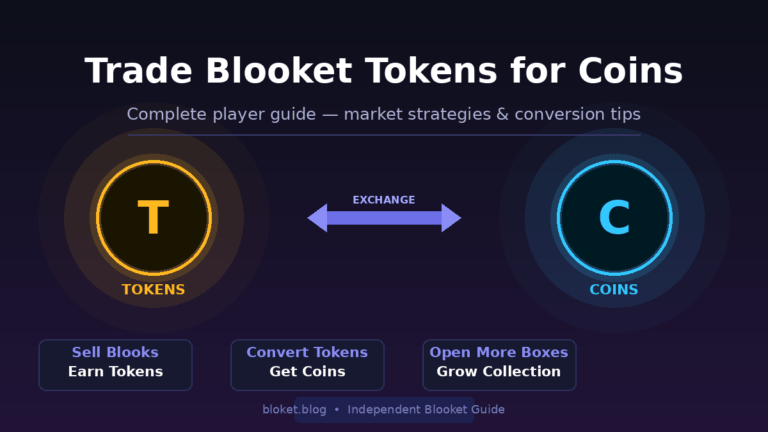
If a pack opens to reveal a blook you already own, it automatically converts to duplicate tokens — and our guide on trading Blooket tokens for coins covers exactly how to convert and use them. These tokens are not useless. They accumulate in your account and can be exchanged for specific blooks through the token system.
Understanding blook rarities before you buy
Every blook in the Market belongs to a rarity tier. Understanding these tiers before spending a single coin changes how you approach every purchase.
The full rarity ladder
- Common: The highest drop rate in any pack. These blooks are easy to collect and quickly fill the bottom tier of your collection. Low prestige value but useful for completing packs efficiently.
- Uncommon: Slightly lower odds than Common. Still pulls at a reasonable rate across most pack sessions. Good for building collection breadth without heavy coin investment.
- Rare: A noticeable drop in pull rate. On average, it takes multiple pack opens to land a Rare, depending on the pack’s pool size.
- Epic: Low odds. A player opening a mid-tier pack can expect to open several packs before pulling one.
- Legendary: Very low odds. These blooks are the most commonly targeted and the most coin-intensive to chase. Pulling a Legendary from a single session is uncommon.
- Chroma: Extremely low odds. Animated or high-visual-impact blooks that represent the top of the rarity scale. Even dedicated grinders rarely pull Chromas without significant coin investment.
- Mystical and Special: Appear in specific packs with odds typically lower than standard Legendary. These often coincide with themed packs.
Why rarity tiers change your strategy
A pack with 20 blooks in the pool will feel very different depending on how many you already own. Early opens in a new pack carry the best odds per coin spent, because any pull is likely to be something new. As your ownership in that pack increases, duplicate probability rises and coin efficiency drops.
The practical rule: never chase a Legendary in a pack where you already own most of the Commons and Uncommons — our Blooket box best blooks guide breaks down which boxes hold the most valuable pulls. At that point, most opens will result in duplicates, and the duplicate tokens you earn back are worth far less than the coins you spent.
Which packs are worth buying?
The right pack depends entirely on where you are in your collection journey. Here is a breakdown by stage and pack tier.
Low-cost packs for new players
Starter packs and economy packs typically cost 15–25 coins per open. They contain mostly Common and Uncommon blooks, with occasional Rares. For players starting from zero, these packs give the highest volume of new blooks per coin spent. Opening ten low-cost packs as a new player almost guarantees ten different blooks, simply because the collection is empty.
The goal in this phase is breadth. Collect widely before going deep on any single pack.
Mid-tier packs for intermediate collectors
Packs priced in a similar range but with richer blook pools — including some of the game’s most recognizable characters — represent the sweet spot for players who have already worked through the starter options. These packs introduce more Epic and Legendary pulls and offer better visual variety.
Premium packs for experienced players
Packs like the Rainbow Pack, Spooky Pack, or Aquatic Pack sit at significantly higher price points (commonly around 300 coins per open for the premium category). These contain the rarest and most visually impressive blooks in the game.
Buying premium packs is only efficient when you have already collected most of the lower-rarity blooks in that pool — our Blooket box opening strategy guide walks through this approach in detail. A 300-coin open that lands a Common you already own returns duplicate tokens worth a fraction of what you spent. Premium packs are not a fast path to rare blooks — they are the final stage of completing a collection after the groundwork is laid.
Box packs and special releases
Box packs appear periodically and differ from standard packs in structure and pricing. They often carry different odds distributions or include blooks not available elsewhere. When a box pack aligns with blooks you want, they can offer strong value. Always check the pool contents before spending, since not all box packs suit every collector’s goals.
Pack value at a glance
| Player stage | Coin balance | Best pack type | Reason |
| Beginner | Under 200 | Low-cost (15–25 coins) | Maximum new blooks per coin |
| Intermediate | 200–800 | Mid-tier packs | Better variety, manageable duplicate risk |
| Advanced | 800–2000+ | Premium packs | Efficient only after clearing lower rarities |
| Targeted collector | Any | Track missing blooks by pack | Duplicate tokens guide remaining purchases |
Step-by-step: how to buy in the Blooket Market
The process is the same across web and mobile.
- Log in to your Blooket account and check your coin balance in the top corner of the dashboard.
- Open the Market by clicking or tapping the shop icon from the main menu.
- Browse available packs. Each pack shows its coin cost, a sample of blooks inside, and rarity labels. Some packs also show how many blooks are in the pool.
- Check your collection before buying. Navigate to your collection, note which blooks from the target pack you already own, and estimate duplicate risk before spending.
- Select the pack and review the purchase screen. Confirm the cost and pool contents.
- Open the pack. Coins deduct immediately. The animated reveal shows which blook you received.
- Note the result. A new blook goes to your collection. A duplicate converts to tokens automatically.
- Track your token balance. After several sessions, check whether accumulated tokens can be exchanged for a blook you want — this bypasses pack randomness entirely for targeted goals.
- Plan the next buy. Decide whether to open another pack immediately or save coins for a better entry point (more on this in the mistakes section below).
How to build a collection efficiently
Collecting every blook in Blooket is a long-term goal. The players who get there fastest follow a few consistent habits.
Complete cheap packs before moving up
Finishing a pack — owning every blook in it — gets harder and more expensive as you near completion. The last few blooks in any pack cost far more coins per blook than the first ones did, because duplicate probability is high. Completing cheap packs first maximises total blooks owned relative to total coins spent.
Use the token economy deliberately
Duplicate tokens are not a consolation prize — they are a secondary currency. Track them actively. When you are one or two blooks away from completing a pack, tokens may let you finish the set without buying into more coin-draining opens. Some players ignore tokens entirely and leave significant value unused.
Save before entering new packs
When a new pack releases, the best time to open it is with a full stockpile of coins saved in advance — our guide on the best time to open Blooket boxes covers the timing decision in full. Early opens in a fresh pack almost always yield new blooks, making them the most efficient opens available. Players who have hoarded 500–1,000+ coins before a new pack launches get far more value per coin than players who enter with 50 coins and trickle through opens over weeks.
Set a per-session spending limit
Tilt spending — continuing to open packs after several disappointing results hoping the next one will land a Legendary — is the fastest way to drain coins without improving a collection. Our smart Blooket coin spending guide covers the discipline that prevents this spiral. Setting a mental limit (for example, no more than five opens per session on a premium pack) prevents the worst-case spending spirals.
Common mistakes that drain coins
Most collection regrets trace back to a small set of avoidable errors.
Opening premium packs as a new player
A 300-coin premium pack opened by a player with a nearly empty collection sounds appealing — the odds of pulling something new are high. But the odds of pulling something rare are still low, and the coin cost per blook is much higher than low-tier packs. New players who start with premium packs often end up with an expensive Common.
Forgetting to check collection gaps
Opening a pack without checking which blooks you already own from that pool is the single most common waste pattern. Two minutes reviewing your collection before each purchase session prevents dozens of avoidable duplicates.
Treating duplicate tokens as worthless
Players who ignore duplicate tokens are leaving the equivalent of free pack opens on the table. A well-managed token balance, built up over several weeks of normal play, can often cover the cost of finishing a pack’s final few blooks.
Spreading coins too thin across too many packs
Opening one or two packs each from ten different pool options builds a wide but shallow collection and keeps duplicate probability high everywhere. Focusing coin spending on two or three packs at a time until those pools are deeper is more efficient than scattering opens broadly.
Tips for teachers using the Market
Teachers access a different part of Blooket (the hosting dashboard), but understanding the student-facing Market helps explain how the reward loop works in classroom settings.
How the Market motivates students
Blooks are cosmetic — they do not change gameplay outcomes — but students place real social value on rare blooks. Knowing that coins come from game performance, and that coins buy pack opens, creates a clear effort-to-reward chain. Students who see peers with rare or animated Chromas often ask how to get them, which opens a natural conversation about performance-based earnings.
Choosing game modes for coin rewards
Some game modes pay out more coins per session than others. Tower of Doom and Gold Quest tend to generate higher per-game coin totals, particularly in longer sessions with more questions. Factory mode rewards steady performance. Racing-style modes like Racing are faster but can yield lower totals. Matching the mode to your class’s time constraints while understanding coin output helps teachers use the Market as an engagement tool intentionally.
Explaining pack randomness to students
Students who understand that packs are random — and that saving coins increases long-term results — are learning a practical lesson in probability and delayed gratification. Some teachers use the Market explicitly to discuss expected value: “If a blook has a 1% drop rate, how many opens would you expect to need?” It is a surprisingly productive classroom side-discussion.
Blooket Plus and Market access
Students with Blooket Plus subscriptions see additional blooks and pack options not available to free accounts. If a student asks why they cannot see certain Market items that a peer can, the subscription difference is almost always the explanation. Communicating this clearly to students and parents prevents confusion about what is available at the free tier.
FAQs
Can I buy a specific blook in the Blooket Market?
No. The Market sells packs, and each purchase is a random draw from the pack’s blook pool. The only way to target a specific blook is through the duplicate token exchange system, which lets you redeem accumulated tokens for certain blooks rather than relying on pack luck.
How many coins does a pack cost?
Prices vary by tier. Basic packs typically cost 15–25 coins per open. Premium packs such as the Rainbow Pack cost around 300 coins. Exact prices can change when new packs are added, so check the current Market display for up-to-date costs before spending.
What happens when I pull a duplicate blook?
Duplicates convert to duplicate tokens automatically. These tokens accumulate in your account and are exchangeable for specific blooks, giving you a secondary path to collection completion that does not depend on pack randomness.
Do coins expire? Can I save them up?
Coins do not expire. Saving coins over multiple sessions before opening a new pack is often more efficient than spending them immediately, because stockpiled coins let you enter fresh pack pools early — when duplicate probability is lowest.
Is the Blooket Market pay-to-win?
No. Blooks are entirely cosmetic and have no effect on gameplay performance, answer accuracy, or in-game power. A player using the default Blooket blook competes identically to one using a Chroma.
Can teachers buy blooks for students?
No. Each student account earns and spends its own coins independently. Teachers cannot transfer coins or blooks between accounts. Teachers can influence student coin earnings indirectly by choosing game modes and session lengths that produce higher payouts.
What is the best first pack for a beginner?
Any low-cost pack that contains blooks you do not yet own. The goal early in a collection is volume — collecting many different blooks cheaply before moving to premium packs where duplicate risk is higher. Start with the cheapest packs that interest you and work up from there.
Does Blooket Plus give access to more Market content?
Yes. Blooket Plus subscribers can see and purchase exclusive blooks not available to free accounts. The standard Market remains accessible to all players, and the majority of blooks can be collected without a subscription.
Conclusion
The Blooket Market rewards patience and planning more than raw coin volume. Spend on lower-cost packs first, track collection gaps before each session, save coins before entering new pack releases, and use duplicate tokens instead of dismissing them.
The players who build the strongest collections are usually not the ones who earned the most coins — they are the ones who spent them in the right sequence. Apply that logic from the start and the Market becomes predictable rather than frustrating. For the full picture of how earning and spending fit together, our Blooket economy explained guide ties every system into one place.
Uncover new ideas and perspectives—our top selections offer something valuable for everyone.