Common Blooket Blooks List: Complete Rarity Guide
Every Blooket player opens hundreds of boxes before they see a rare drop. Most of what comes out is common blooks — the baseline tier that fills your collection quickly and, when managed well, funds your token balance for rarer hunts. Common blooks get overlooked because they’re not flashy, but they’re the foundation of the entire blook economy. This guide lists confirmed common blooks organized by box, explains what each is worth on the market, and shows you exactly what to do with the duplicates that pile up over time.
What are common blooks in Blooket?
Common blooks are the lowest rarity tier in Blooket’s collection system. They appear most frequently from box openings, which means they accumulate fast — especially once you start opening boxes consistently. Every box type in Blooket includes several common blooks in its loot table, and they represent the bulk of what most players receive in any given opening session.
How Blooket’s rarity system works
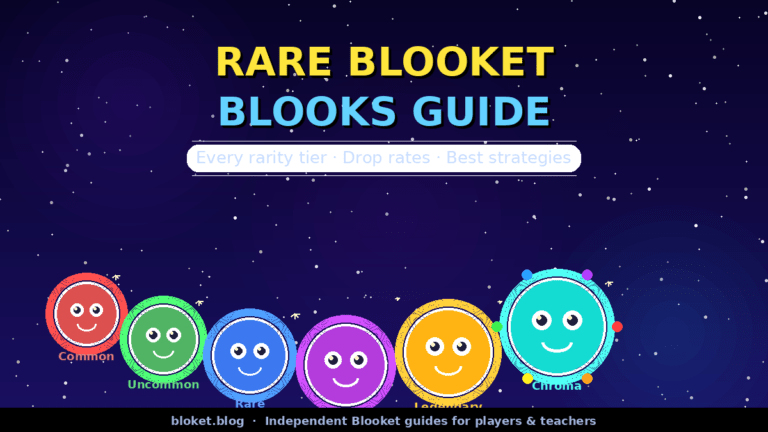
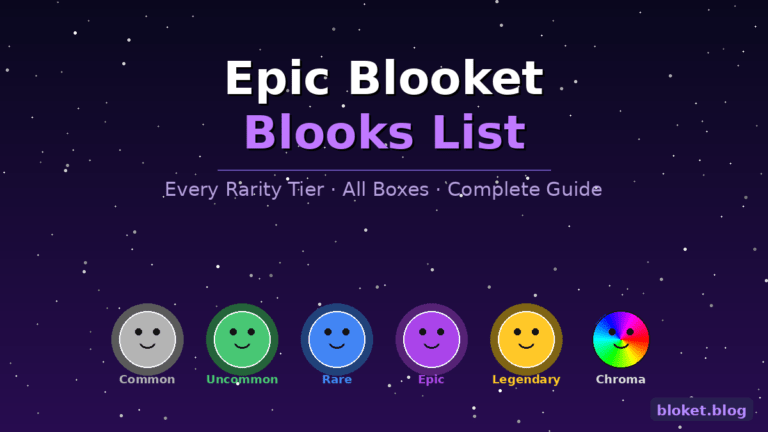
Blooket assigns every blook one of six rarity tiers: Common, Uncommon, Rare, Epic, Legendary, and Chroma. The tier determines two things: how often that blook drops from a box, and roughly how much it trades for on the market. Common blooks have the highest drop rate and the lowest market value. The next step up is the uncommon Blooket blooks list, which drops noticeably less often. Chroma blooks sit at the opposite extreme — the lowest drop rate and the highest value by a wide margin.
The distance between Common and Chroma is significant. A Common blook might appear every few box opens. A Chroma blook can require hundreds of opens with no result. Keeping that scale in mind prevents frustration during any box-opening session.
Tim: the universal starter blook
Tim is the blook every Blooket player has from day one. Unlike every other blook in the game, Tim is not obtained from a box — it’s automatically assigned to every new account for free. Tim is a simple, friendly character design and serves as the default avatar before players start building their collections. While Tim falls within the Common rarity classification, it cannot be earned through box drops or sold on the market because every player already owns one.
What makes a blook “common” in practice
Common blooks share three consistent characteristics regardless of which box they come from:
- Low market value: High drop rates mean high supply on the market, which keeps prices low. Most common blooks sell for a few hundred tokens or less.
- High duplicate rate: Open enough boxes and you will accumulate multiple copies of the same common blooks. Those duplicates are where their real token value comes from.
- Simpler designs: Common blooks generally use simpler visual designs than the Epic Blooket blooks or legendary tier blooks most players actively chase. They’re the baseline of the collection, not the showpiece.
Full common Blooket blooks list by box
The common blooks available to you depend entirely on which boxes you open. Each box has its own loot table with its own set of commons. Below is a box-by-box breakdown of confirmed common blooks across Blooket’s main categories. Token values shown are approximate ranges based on typical market conditions — actual prices shift with supply and demand, so always check the market before listing.
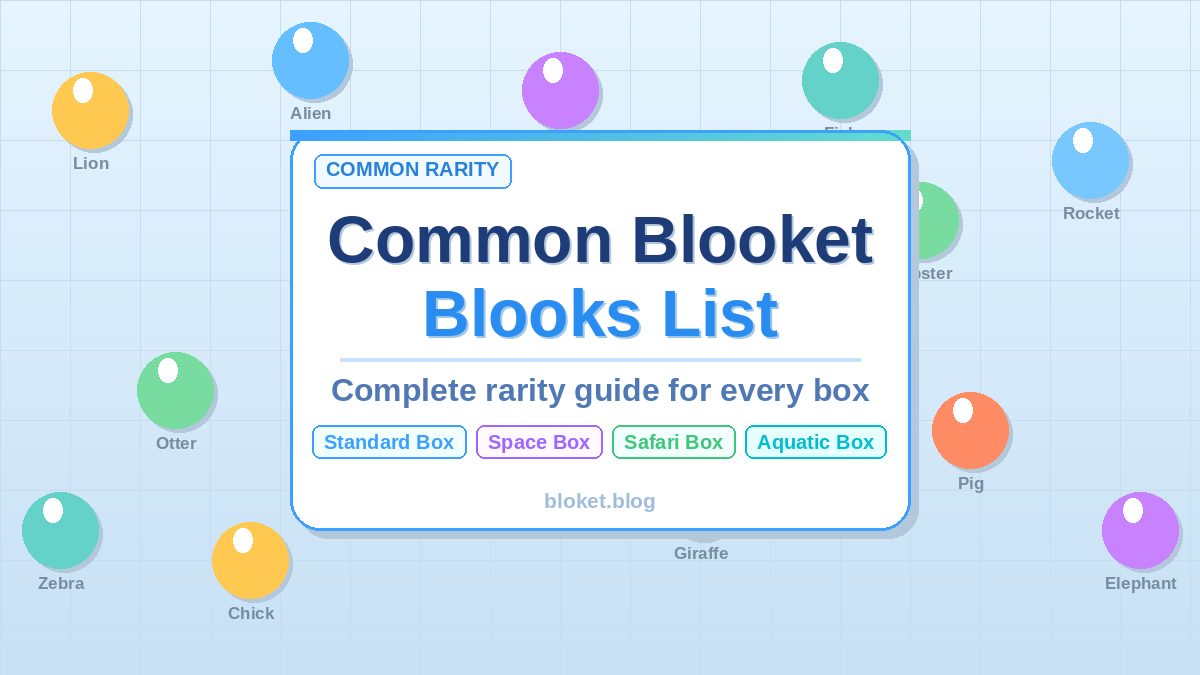
Standard box common blooks
The Standard Box is the most widely opened box in Blooket and the one most players start with. It contains a broad mix of blooks across all rarity tiers, and its common pool is one of the largest of any single box.
| Blook | Rarity | Approx. market value |
| Otter | Common | 100–300 tokens |
| Lion | Common | 100–300 tokens |
| Polar Bear | Common | 100–250 tokens |
| Baby Shark | Common | 100–300 tokens |
| Pig | Common | 50–200 tokens |
| Chick | Common | 50–200 tokens |
Space box common blooks
The Space Box is one of Blooket’s most popular themed boxes. Its common tier uses straightforward space-themed designs, while its Epic, Legendary, and Chroma tiers contain the blooks players actively chase.
| Blook | Rarity | Approx. market value |
| Alien | Common | 100–250 tokens |
| Rocket | Common | 100–250 tokens |
| Astronaut | Common | 150–300 tokens |
Aquatic box common blooks
The Aquatic Box covers ocean and sea life. Common blooks in this box use clean, simple creature designs. They move quickly on the market because demand for aquatic-themed blooks stays steady.
| Blook | Rarity | Approx. market value |
| Fish | Common | 50–200 tokens |
| Crab | Common | 100–250 tokens |
| Jellyfish | Common | 100–200 tokens |
| Lobster | Common | 100–250 tokens |
Safari box common blooks
The Safari Box focuses on recognizable savanna animals. Its common tier covers straightforward animal designs — and for the full animal Blooket blooks list across every rarity tier, that guide breaks down every animal-themed blook in the game. The box is popular enough that Safari commons move reliably on the market.
| Blook | Rarity | Approx. market value |
| Giraffe | Common | 100–300 tokens |
| Elephant | Common | 100–300 tokens |
| Hippo | Common | 100–250 tokens |
| Zebra | Common | 100–250 tokens |
Medieval box common blooks
The Medieval Box introduces fantasy and historical character types. Its common tier covers the most recognizable medieval archetypes in simple designs.
| Blook | Rarity | Approx. market value |
| Knight | Common | 100–300 tokens |
| Horse | Common | 100–250 tokens |
| Peasant | Common | 50–200 tokens |
Finding common blooks in other boxes
Every Blooket box — including seasonal event boxes and special featured boxes — includes common blooks in its loot table. The boxes above cover the most widely available options. To see the complete blook list for any box before you open it, tap the info icon on the box selection screen. Blooket displays every possible blook and its rarity tier so you know exactly what you’re opening before spending a single token.
What should you do with common blooks?
Common blooks are most useful not as display pieces but as token generators. Managing them consistently is one of the fastest ways to build the token balance you need to chase higher rarity blooks.
Sell duplicates immediately
Selling duplicates right after each box-opening session is the single highest-impact habit for any Blooket player. Even at 150 tokens per blook, ten duplicates sold equals 1,500 tokens — enough to fund several more box opens depending on the box. Players who let duplicates sit idle are effectively leaving earned tokens uncollected.
The habit compounds over time. A player who sells duplicates every session will consistently outpace one who ignores them, even if both spend the same time playing.
How to sell a common blook on the market
- Open your Blooket dashboard and navigate to your blook collection.
- Find the common blook you want to sell. If duplicates exist, the count is displayed alongside the blook.
- Select the blook and choose the option to list it on the market.
- Check current listings for that blook before entering a price. Pricing above market rate means your listing won’t sell.
- Confirm the listing. Once a buyer purchases it, the tokens are added to your balance automatically.
Checking current listings before every sale takes under a minute. For common blooks where margins are thin, matching or slightly undercutting the going rate is almost always the right move.
Keep one copy of each for your collection
Before selling any duplicates, confirm you’re retaining at least one copy of each common blook. Owning a full range of commons gives you more options for which blook to equip during games, and having variety in your collection matters if you’re building toward a complete set. Selling your only copy of a blook means paying market price to get it back later — which almost always costs more than you sold it for.
Use common blook earnings to fund smarter box decisions
Token income from selling common duplicates adds up to real purchasing power. When that income accumulates, it’s worth pausing and comparing two options: keep opening the same box, or use the tokens to buy a specific higher-rarity blook — like a rare Blooket blook — from the market. For many players, a few weeks of consistent duplicate selling generates enough tokens to skip box-opening altogether for a blook they specifically want.
How to build tokens efficiently using common blooks
Common blooks are the engine of the Blooket token economy for most players. Used strategically, they turn routine box openings into a self-sustaining loop: open boxes, collect commons, sell duplicates, open more boxes. The players who understand this loop and execute it consistently move up the rarity ladder faster than those chasing Chroma blooks through raw luck.
Set a token target before each session
Before opening any boxes, decide what you’re working toward. If you want a specific Rare or Epic blook from a box, estimate how many opens it might take and multiply by the box cost. If the market price for that blook is lower than your estimated open cost, buy it directly. Setting a token target prevents the most common trap: opening boxes aimlessly until your balance runs out.
Track which box gives you the best common-to-useful-blook ratio
Not every box is equally efficient. Some boxes have a higher proportion of common blooks in their loot table, which means more duplicates per token spent and less chance of dropping the Epic or Legendary you want. After several sessions opening a specific box, you’ll develop a feel for its payout pattern. If a box consistently returns mostly commons with no higher rarity drops, consider shifting to a box with a better ratio or switching to the market entirely.
Time your market listings strategically
Blooket’s market fluctuates with player activity. Listing common blooks during peak play hours — typically after school and on weekends in most regions — can mean faster sales because more buyers are active. This isn’t a strict rule, but players who list at off-peak times sometimes find their listings sitting longer than expected. If a common blook listing hasn’t sold after a day or two, it’s worth reviewing the price against current competition and adjusting if needed.
Use common blooks as a benchmark for box value
Here’s a practical check: if you’ve opened a box a large number of times and the majority of your drops have been common blooks, compare what those opens cost in tokens against the current market price of the rarest blook in that box. If the market price is lower than your total token spend on opens, the market was the better choice the whole time. This isn’t hindsight criticism — it’s a useful benchmark to apply before you start a new box-opening run.
Mistakes players make with common blooks
Hoarding duplicates without selling
The most common error is letting duplicate common blooks pile up in your inventory without selling them. Some players assume the individual token amounts aren’t worth the effort. Over a full session of box openings, though, 15 or 20 duplicates sold at modest prices can generate more tokens than the entire session would otherwise net. Treating each duplicate as a small token deposit — rather than dead inventory — changes how quickly your balance grows.
Listing without checking the current market price
Setting a sell price without looking at live market listings first is a consistent mistake. If the going rate for a blook is 200 tokens and you list at 600, it won’t sell. If you list at 80 when demand is higher, you’re underselling. The market price for common blooks fluctuates, and a quick check before each listing takes care of both problems.
Assuming all common blooks sell for the same amount
Rarity tier doesn’t determine market price alone — demand does. A common blook from a recently released or popular box can temporarily trade at higher prices than an older common blook from a legacy box, even though both carry the same rarity classification. Checking individual blook prices rather than using one flat estimate for all commons prevents underselling the better-performing ones.
Opening boxes specifically to farm common blooks
Common blooks are not worth spending tokens to target. If you want a specific common blook you don’t own yet, the market is almost always cheaper than box openings. Common blooks typically cost a few hundred tokens on the market — far less than the average cost of opening a box and hoping a specific one drops. Box openings exist for chasing the rare, Epic, Legendary, or Chroma blooks in a loot table. Using them as a common blook farming strategy burns tokens inefficiently.
Skipping the box info screen before opening
Every box in Blooket shows its complete loot table and rarity breakdown before you spend tokens. Skipping this step can lead to opening boxes that don’t contain the blooks you want or expecting commons that aren’t in that box’s loot table at all. Thirty seconds reviewing the info screen before committing tokens costs nothing and prevents wasted opens.
FAQs
How many common blooks are there in Blooket?
The exact number grows as Blooket adds new boxes and blooks over time. Each box typically contains several common blooks, and with dozens of boxes available, the total runs into the dozens across all categories. The most reliable way to see every common blook is the in-game blook collection, which displays each blook’s rarity tier and whether you own it.
Can you get common blooks without spending tokens?
Tim, the default starter blook, is free for every new account. All other common blooks require box openings, which cost tokens. Since tokens are earned by playing Blooket games, any player who participates regularly can collect common blooks without spending real money — it just takes consistent play.
Are common blooks worth selling on the market?
Yes, even though individual values are low. The real value comes from volume. Selling ten to twenty common duplicates after each box-opening session consistently adds hundreds or thousands of tokens to your balance over time, which compounds into meaningful purchasing power for rarer blooks.
How do I see which common blooks I already own?
Open your Blooket account and navigate to your blook collection. Every blook you own appears there with its rarity tier labeled. Blooks you haven’t collected yet are shown grayed out, which also makes it easy to identify which common blooks are still missing from your set.
Can a common blook become more valuable over time?
Its rarity classification stays the same, but market value can rise if a box is retired or a specific blook is removed from the loot table. Once a common blook is no longer obtainable through normal box openings, market supply drops and prices can climb — even though it’s still labeled Common in your collection.
Do common blooks affect gameplay in any way?
No. Every blook in Blooket is purely cosmetic. Common blooks change your avatar’s appearance in the game lobby and on leaderboards, but they have no effect on question accuracy, scores, or game outcomes. The same is true of every rarity tier, including Chroma.
Is it better to open boxes or buy common blooks from the market?
For common blooks specifically, buying from the market is almost always the better choice. Most common blooks cost a few hundred tokens on the market — consistently less than the average cost of opening a box and hoping a specific one drops. Save box opens for chasing higher rarity blooks.
Conclusion
Common blooks are the starting point of every Blooket collection, and the players who manage them well — selling duplicates consistently, pricing listings accurately, and using the market to fill specific gaps cheaply — build their token balances faster than those who treat commons as throwaway drops. A steady habit of selling duplicates after each session is real income that compounds across weeks of play.
Start right now: open your blook collection, find every common blook you have more than one of, and list the duplicates on the market at the current going price. Put those tokens toward the box or market purchase that gets you the next rarity tier up. For the complete roadmap, see our guide on how to unlock all Blooket Blooks — it walks through every tier from Common to Chroma in order.
Get ready to discover something new—our featured articles are packed with valuable insights.